What is Instructional Design?
Instructional Design is a systematic process used to create educational and training experiences in a consistent and reliable fashion. The goal is to ensure that learning is effective, engaging, and aligned with specific objectives.
- Key characteristics of instructional design include:
- Analyzing learners’ needs and defining clear learning outcomes.
- Designing instructional materials and activities that facilitate knowledge acquisition and skill development.
- Developing resources such as presentations, e-learning modules, and assessments.
- Implementing instructional solutions in classrooms, online environments, or blended formats.
- Evaluating the effectiveness of instruction and making data-driven improvements.
There are many instructional design models, but most follow the same essential principles of unpacking expected learning outcomes, planning for how to assess the mastery of those outcomes and then building activities and selecting materials that support that learning experience. Below you will find a brief explainer video about some common instructional design models. These design elements are even more significant in online and hybrid course delivery.

Understanding by Design Framework
Understanding by Design is a backward-planning framework that starts with identifying desired learning outcomes, then determining acceptable evidence of learning, and finally planning instructional activities. It emphasizes deep understanding and transfer of learning.
The ADDIE Model
ADDIE is an instruction design model with five phases: Analyze, Design, Develop, Implement, and Evaluate; used to create effective learning experiences. It offers a structured, iterative approach to designing instruction.
Gagne’s 9 Events
Gagne’s 9 Events outline a sequence of instructional steps – from gaining attention to enhancing retention – that align with how people learn. These steps guide instructors in structuring lessons for maximum engagement and effectiveness.
The ADDIE Model
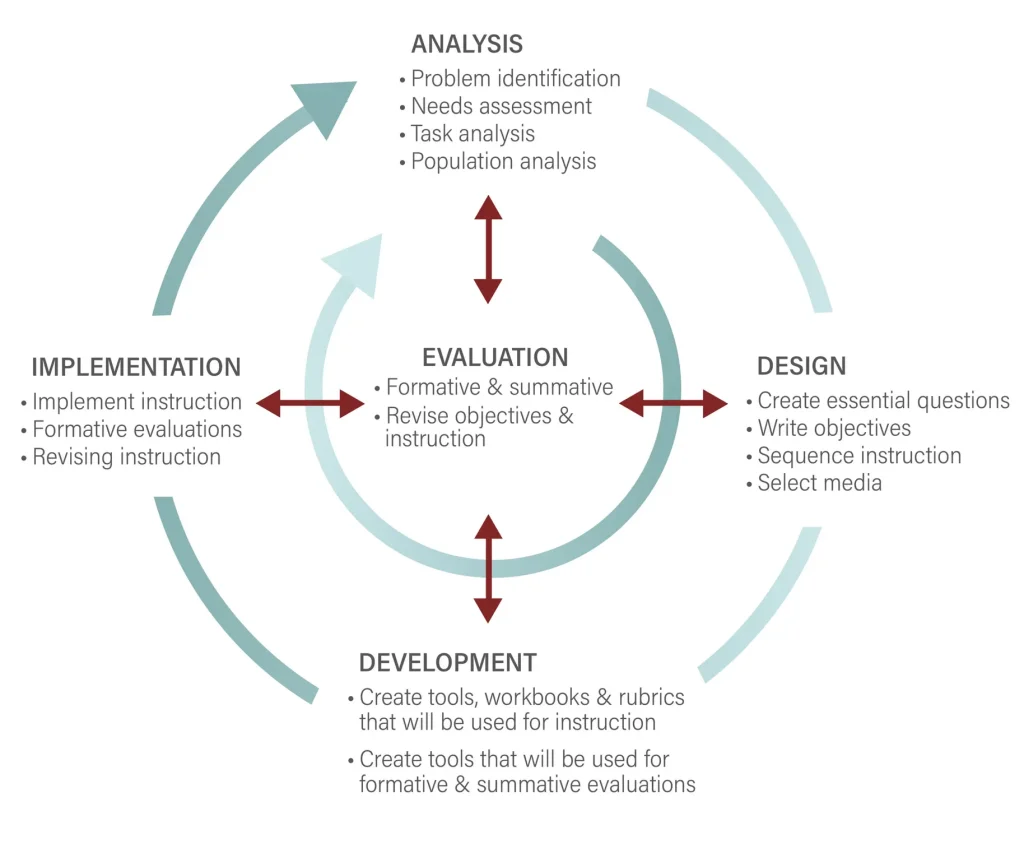
Analysis
This phase involves identifying the learning needs and objectives, as well as the characteristics of the learners, the context in which the learning will occur, and any constraints or limitations that may affect the instructional design.
Design
During the design phase, the designer selects appropriate learning strategies, content, and delivery methods to achieve the learning objectives, including selecting materials and media, defining the sequence and structure of learning activities, and developing a detailed plan for instruction.
Development
The development phase involves creating instructional materials based on the design plan, including content, multimedia elements, and selecting appropriate technologies.
Implementation
The implementation phase involves delivering the materials to learners through instruction and providing support for learners, such as technical support and access to resources.
Evaluation
During the evaluation phase, the instructional design is assessed for effectiveness by measuring the achievement of learning objectives, collecting feedback from learners and instructors, and assessing the overall effectiveness of the design to inform revisions as needed.
Benefitting from Design
Better understanding of learners’ needs
Through the process of instructional design, educators can gain a deeper understanding of their learners’ needs, abilities, and preferences. This knowledge can help them design more effective and engaging learning experiences that are tailored to the specific needs of their students.
Improved learning outcomes
By using instructional design principles, educators can create learning experiences that are more likely to result in improved learning outcomes for their students. This can include increased retention of information, better understanding of complex concepts, and improved application of skills in real-world settings.
Increased efficiency
Instructional design can help educators create more efficient learning experiences by identifying the most effective methods of delivering content and assessing learning outcomes. This can save time and resources, while still achieving desired learning outcomes.
Flexibility
Instructional design can help educators create learning experiences that are flexible and adaptable to different contexts and situations. This can include using different delivery methods, incorporating technology, and allowing for individualized learning pathways.
Continuous improvement
By incorporating evaluation and feedback into the instructional design process, educators can continuously improve their teaching practices and learning experiences. This can lead to ongoing professional development and better outcomes for their students.