
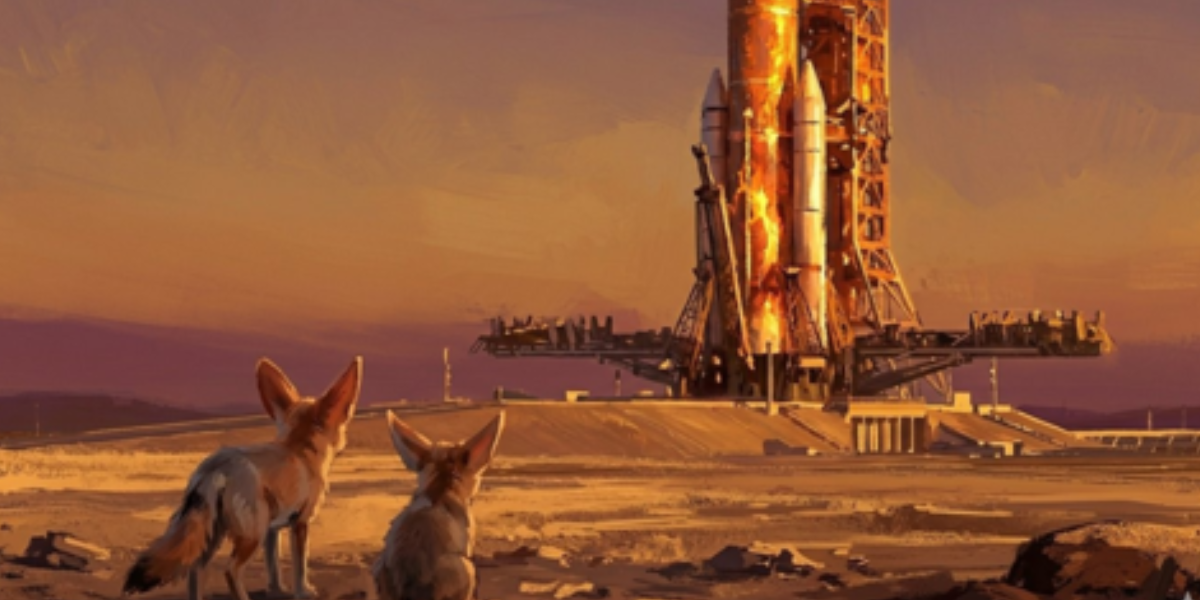
 An AI-generated image by student Kendall Carey, intended to show the beauty of animals in contrast to our modern world. (Image generated using Google Gemini)
In Prof. Darren Broemmer’s CAI 2220 course titled Introduction to Generative AI and Prompt Engineering, students are stepping into the emerging world of artificial intelligence with an assignment that challenges them to think beyond traditional boundaries of art and creativity.
Through a thematic AI art project, students are learning how to collaborate with technology, refine their creative voice, and build skills that directly translate to the modern workforce.
A New Kind of Art Assignment
Rather than producing a single image, students are tasked with developing a cohesive thematic art series using AI image generation tools. The assignment pushes them to think like creative directors by selecting a concept, crafting detailed prompts, iterating on results, and ultimately presenting a polished visual narrative supported by reflection on their creative process.
Preparation for the project is intentional and layered. Students begin by learning the fundamentals of generative AI, including how to write effective prompts and how to use AI responsibly. They also explore the idea that AI is a tool, not a replacement for human creativity.
“This is not just pressing a button,” says Prof. Broemmer. “The students are creating art and making the creative decisions but letting the tools perform the actual image rendering.”
The core learning objective is clear: students must understand how to communicate ideas effectively to AI systems, while still relying on their own imagination, perspective, and critical thinking to guide the final output.
Learning Through Innovation
The course integrates both theory and hands-on application. Students examine emerging research on prompt engineering and then immediately apply those techniques across multiple use cases, including writing, research, and image generation.
Along the way, the students develop AI literacy skills. They gain insight into what AI can do well, where it falls short, and how to navigate ethical challenges such as bias, intellectual property, and misinformation.
A key takeaway for students is the importance of precision and individuality in prompting. Generic inputs produce generic results, but thoughtful, detailed prompts elevate the quality and creativity of AI-generated work.
Student Work: Creativity Meets Technology
The results of the assignment demonstrate the powerful intersection of human imagination and AI capability. Students produced visually compelling series with a clear artistic concept and refined through iterative development.
Across all projects, one theme remained consistent: Generative AI expanded the possibilities, but students provided the meaning.
Student Perspective: From Skepticism to Skill
For Kendall Carey, an aspiring mechanical engineer, the project began with uncertainty. Initially skeptical about AI-generated imagery, Kendall quickly discovered its potential for customization and artistic flexibility.
Through the assignment, Kendall learned how to refine prompts and experiment with different approaches to achieve desired results, a skill that extends far beyond the classroom.
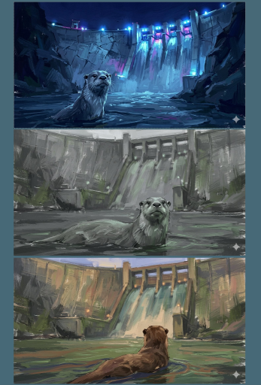
“My theme is how dwarfed, yet beautiful, animals are when compared to our large-scale technology,” she explains. “The paintings convey both a sense of wonder and slight sadness when seeing the tiny animals and looking up at the technology from their perspective.”
She experimented with four different AI tools for image generation before landing on Nano Banana within the Google Gemini suite.
“I ended up choosing Gemini because it generated images closest to what I wanted them to look like, following my prompt,” Carey said. “I found that the other AIs tended to ignore parts of the prompt, resulting in more generic images further from my vision.”
Carey explains how she utilized a series of prompts to achieve the visual and style she wanted.
“After the first photo was generated, I prompted to have the AI recreate the otter image and have the animal face the dam and utilize greens and grays to change the color scheme but maintain the impressionist style I wanted,” she explains. “The next prompt created the final image which had the otter facing the dam and added in the colors I was seeking.”
Kendall believes that AI will play a major role in future careers and noted that learning how to use it effectively is becoming a crucial skill in the workforce.
Preparing Students for the Workforce
As AI becomes increasingly embedded across industries, the ability to work alongside these tools is a clear competitive advantage. This project equips students with a hybrid skill set that blends creativity, technical understanding, and critical thinking.
Students learn how to communicate clearly with AI systems, evaluate and refine outputs, apply creative direction and judgment, solve problems through iteration and experimentation, and navigate ethical considerations in technology use.
“In the workforce, the advantage will go to people who can combine human creativity with AI capability,” says Broemmer.
The Future of Learning, Today
By integrating emerging technologies into hands-on learning experiences, LSSC is preparing students not just to keep up with the future, but to lead in it. Through projects like this, students gain the confidence, skills, and perspective needed to navigate the evolving landscape of the modern workforce.
CAI2220 (Introduction to Generative AI and Prompt Engineering) is offered as an elective course and as part of a college-credit certificate and associate degree in Applied Artificial Intelligence designed to prepare students to leverage this technology in a variety of career paths. Learn more at https://www.lssc.edu/academic-programs/.